Play Pac-Land Online Free for Arcade.
Pac-Land hits different when it boots instantly in your browser. Released in 1984 on the Arcade, this platformer classic from Namco is ready the second you press start — no downloads, no setup.
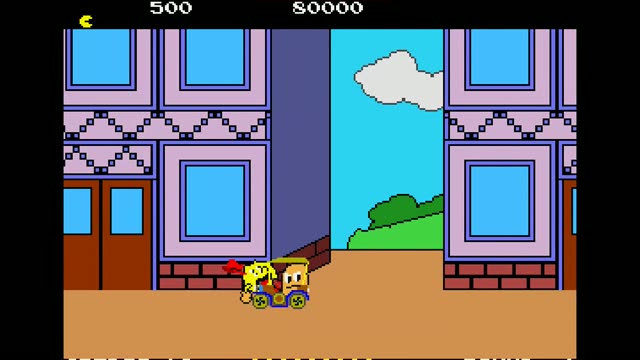
Controlling Pac-Man, the player must make it to the end of each stage to return a lost fairy back to its home in Fairyland. It was released in North America by Bally Midway, and in Europe by Atari Games.
🎮 USB or Bluetooth controller? Plug it in, Once Detected Click Here to Open Your Controller Options
No controller detected yet — plug one in and press any button.
Your controller lights up here as you press buttons. Premium members can remap every action to any pad button.
⭐ Premium members can click any key below to remap the controls. Go Premium
| Action | Keyboard | Controller |
|---|---|---|
| D-Pad Up | ↑ | D-Pad up |
| D-Pad Down | ↓ | D-Pad down |
| D-Pad Left | ← | D-Pad left |
| D-Pad Right | → | D-Pad right |
| B (bottom) | X | Bottom face |
| A (right) | Z | Right face |
| Y (left) | S | Left face |
| X (top) | A | Top face |
| L | Q | Left shoulder |
| R | E | Right shoulder |
| Start | Enter | Start |
| Insert Coin | V | Select |
⭐ Premium members can click any key below to remap this game's controls. Go Premium
| Action | Keyboard | Arcade input |
|---|---|---|
| Run Left / Run Right | · · | Panel buttons |
| Jump | · | Button 1 |
| Start | · | Start |
| Insert Coin | · | Select |
Finding you a match…
Opening your room…
Local play now: plug in a 2nd USB/Bluetooth controller (it becomes Player 2 automatically), or share the keyboard — Player 2 uses IJKL to move and , . M U to act.
⚠ Report this game not working
You’re playing the preview
Create a free account to unlock the full experience for :
- 💾 Save states — snapshot & resume anywhere
- 🎮 Full controller setup & custom key mapping
- ↩ Rewind, fullscreen & display options
You're in! Now go FULL PREMIUM
- 🏆 FREE Tournament Entry — quarterly comps with REAL PRIZES
- 💾 High-score saving — your runs on the boards, forever
- 🚫 ZERO ads — no preroll window, no banners, ever
- 🟢 Unlimited game play + the entire Premium vault
Show the world what Retro is really about.
First registered run claims the top spot. It won't stay easy for long.
Playing counts once you're signed in — register free in the player above.
Other Places You Can Get This Game
Love Pac-Land? Own the real thing — these are legitimate places to buy official versions.

How to Play Pac-Land
The player picks up your keyboard immediately, and any connected gamepad too. Here is the full layout for Pac-Land.
The Story Behind Pac-Land
Most arcade games in Japan at the time simply used two or three frames to convey movement, which he found unconvincing. After seeing the success of Hanna-Barbera's Pac-Man animated series, Namco asked Kishimoto to create an arcade game based on the show; Hanna-Barbera was not involved with the game's development beyond licensing elements related to the series. The arcade game was released in Japan in 1984, but there are conflicting release dates.
However, the United States Copyright Office and John Szczepaniak in the second volume of The Untold History of Japanese Game Developers (2015), when including biography details taken from Kishimoto's resume, lists the release date as October 1984. The game's controls were heavily influenced by Track & Field, a game that allowed the player to become faster by constantly tapping the button in succession; Kishimoto thought the idea was interesting and that it would make it stand out among other games. The game was later released in North America by Bally Midway in December 1984, and in Europe by Atari Games in early 1985.
How Pac-Land Plays
Trips consist of cities, forests, deserts and abandoned castles. Most trip sections end with a large sign saying "BREAK TIME" with a church on a hill in the background, and bonus points are awarded for jumping at certain points at the end of each section. Stages are known in-game as "trips" and are broken into four sections — the first three have Pac-Man running to return a lost fairy back to "Fairyland", and the last having Pac-Man return home to his family.
The player can find hidden items by pushing against specific objects in certain stages, including a helmet that protects Pac-Man from falling mini ghosts, an item that makes Pac-Man temporarily invincible and a Galaxian flagship that awards the player a large sum of points. The ghosts are often seen driving vehicles, such as airplanes, buses, cars, pogo-sticks and flying saucers, and will sometimes drop miniature ghost enemies from the air to try and hit Pac-Man. Eating large flashing Power Pellets will cause the ghosts to turn blue for a short time, allowing Pac-Man to eat them for bonus points.
Why Players Still Load It Up
The only feature of Pac-Land Miyamoto cites as a direct inspiration was the blue background of the game as opposed to the black ones he typically would put in his games. In a retrospective review for the TurboGrafx-16 conversion, IGN disliked the game's difficulty for lacking any real challenge, and said the game seems to have been made simply to keep Pac-Man relevant at the time instead of as a "real deal" game. Computer + Video Games called the PC Engine version a "marvelous conversion" for its vibrant visuals, stage layouts, gameplay and accuracy to the coin-op game; they had a similar response for the Atari Lynx version, claiming its accuracy to the original would entice fans of the arcade release.
He called it an "interesting game" where Pac-Man is an "animated character that moves along a horizontally scrolling landscape" while praising the "very colouful" graphics and stating it is "easy to play once you've got the hang of it." Japanese publication Famitsu praised the PC Engine version's graphics and overall challenge. Raze echoed a similar response, saying the visuals, stage layouts and soundtrack added replay value to the game. AllGame was particularly critical of the TurboGrafx-16 version, lambasting its poor graphics, bland stage layouts and lack of challenge, jokingly saying it was only recommended to collectors interested in "the most morbidly poor games in existence".
Pac-Land — Frequently Asked Questions
Do I need a controller to play Pac-Land?
No. Keyboard controls work out of the box (see the controls panel), and any USB or Bluetooth gamepad is detected automatically.
Who developed Pac-Land?
Development was handled by Namco, with Namco publishing the release.
Where can I buy the original Pac-Land?
See the "Other Places You Can Get This Game" section below the article for legitimate places to buy real-world versions.
What console was Pac-Land released on?
Namco shipped Pac-Land for the Arcade back in 1984, and this page runs that release.