Play PS1 Games Online
The Sony PlayStation shelf is lit up and ready — every game here boots straight in your browser, no downloads, no dust. Sony hardware from 1995, running for real.
The PlayStation is a home video game console developed and marketed by Sony Computer Entertainment. It was released in Japan on 3 December 1994, followed by North America on 9 September 1995, Europe on 29 September 1995, and other regions following thereafter.
Top Scores — Insert Coin to Challenge




The PS1 Story
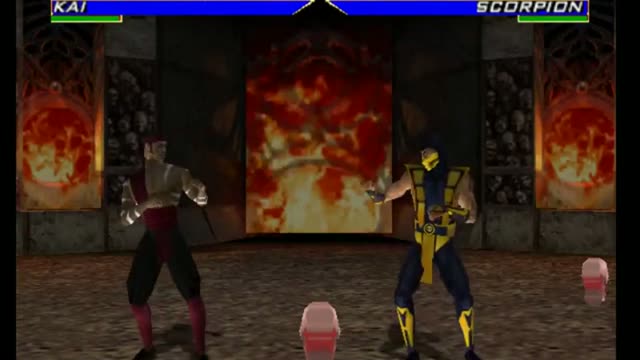
An engineer from Ocean Software, one of Europe's largest game developers at the time, thought that allocating RAM was a challenging aspect given the 3.5 megabyte restriction. This was in contrast to Sega and Nintendo, which had versatile and well-equipped in-house software divisions for their arcade games and could easily port successful games to their home consoles. Attaining these companies secured influential games such as Ridge Racer (1993) and Mortal Kombat 3 (1995), Ridge Racer being one of the most popular arcade games at the time, and it was already confirmed behind closed doors that it would be the PlayStation's first game by December 1993, despite Namco being a longstanding Nintendo developer.
Ian Hetherington, Psygnosis' co-founder, was disappointed after receiving early builds of the PlayStation and recalled that the console "was not fit for purpose" until his team got involved with it. When Psygnosis arranged an audience for SN Systems with Sony's Japanese executives at the January 1994 CES in Las Vegas, Beveridge and Day presented their prototype of the condensed development kit, which could run on an ordinary personal computer with two extension boards. As well as providing programming libraries, SCE headquarters in London, California, and Tokyo housed technical support teams that could work closely with third-party developers if needed.
Why the PS1 Still Hits
They lauded the breadth and quality of the games library, saying it had vastly improved over previous years due to developers mastering the system's capabilities in addition to Sony revising their stance on 2D and role playing games. By the late 1990s, Sony became a highly regarded console brand due to the PlayStation, with a significant lead over second-place Nintendo, while Sega was relegated to a distant third. Sony's next-generation PlayStation 2, which is backward compatible with the PlayStation's DualShock controller and games, was announced in 1999 and launched in 2000.
Hundreds of PlayStation games have been digitally re-released on the PlayStation Portable, PlayStation 3, PlayStation Vita, PlayStation 4, and PlayStation 5. In January 2025, Lorentio Brodesco announced the nsOne project, attempting to reverse engineer PlayStation's motherboard. Critics in the west generally welcomed the new console; the staff of Next Generation reviewed the PlayStation a few weeks after its North American launch, where they commented that, while the CPU is "fairly average", the supplementary custom hardware, such as the GPU and sound processor, is stunningly powerful.
How PS1 Games Run Here
This shelf boots real PS1 software through the pcsx_rearmed core, in the browser, in seconds. Original code means authentic behavior — down to the tricks speedrunners rely on. Nothing to install, gamepad and touch supported, and save states sync once you are signed in.